Waldorf, Maryland
Oven and Range Repair in Waldorf, MD
Oven and Range Repair in Waldorf, Maryland, with the published national price range up front, the failed part confirmed by testing on site, and the repair price stated before any work begins.
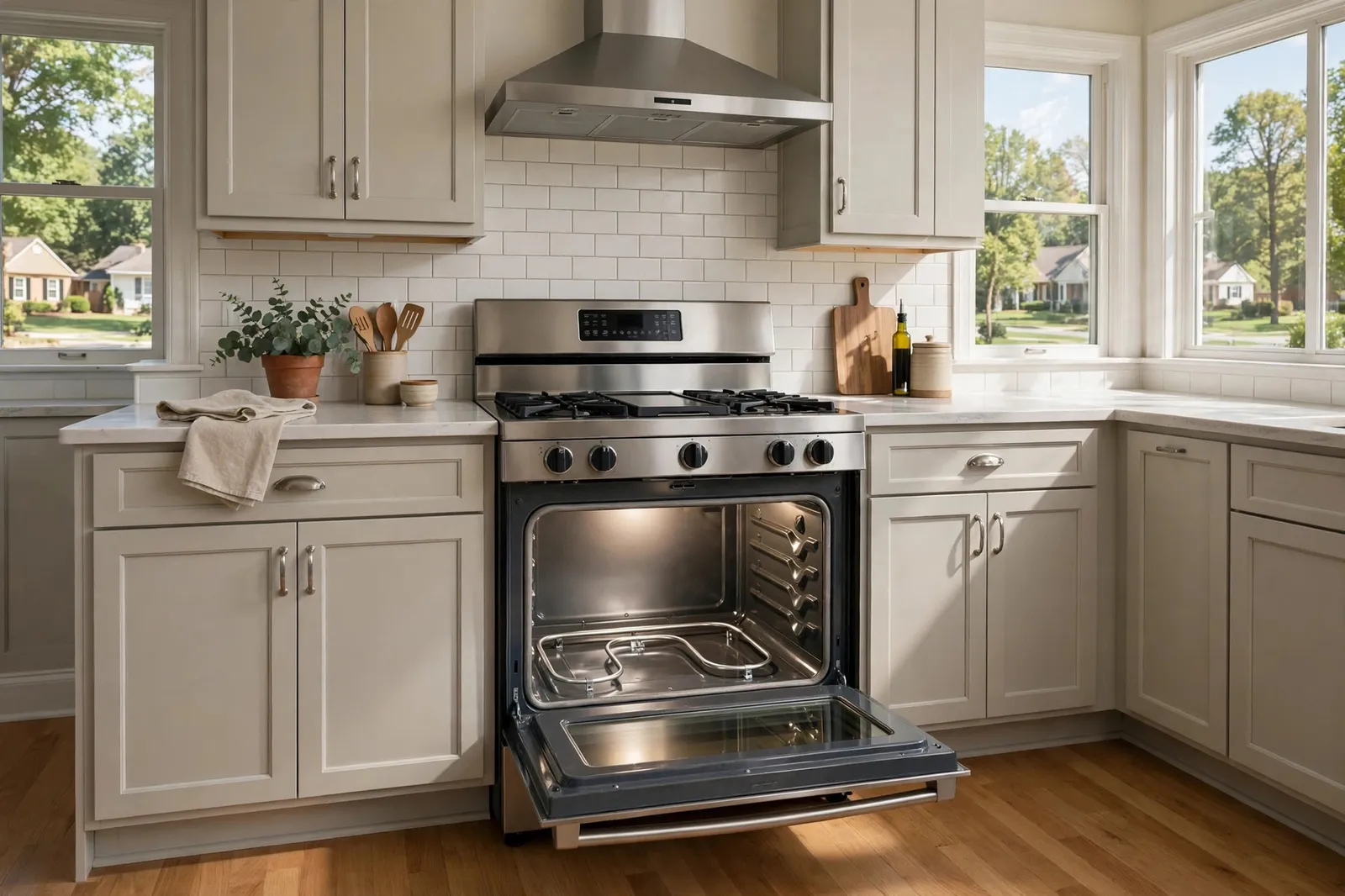
Waldorf, Maryland
Oven and Range Repair in Waldorf, Maryland, with the published national price range up front, the failed part confirmed by testing on site, and the repair price stated before any work begins.
An oven that runs forty degrees cold will ruin more dinners than one that dies outright, because it fails politely, a little at a time, while you adjust recipes and wonder what changed. Range and oven problems across Waldorf kitchens are usually electrical at heart: elements that burn through, igniters that weaken by degrees, sensors that drift, and control boards that fail in ways that imitate three other problems. Waldorf Appliance Repair diagnoses cooking appliances by measurement, including a thermometer in the cavity, because the display on the panel is a claim, not a reading.
Whether your range is gas, electric, or dual fuel, the pattern of the failure tells us where to test first. This page walks through the oven and range repairs we handle most, a recent job and what it cost, the published national ranges for this work, and the quote form at the bottom of the page that starts every job.
Uneven cooking and slow preheats are the top of the list. On electric ovens, bake elements blister and split along their underside as they age, heating in patches before they fail completely. On gas ovens, the igniter is the classic slow failure: it still glows, so the oven eventually lights, but it draws too little current to open the gas valve promptly, and preheats stretch toward forever while gas safety margins do their job. We test element continuity and igniter draw directly rather than judging by glow or appearance.
Temperature complaints deserve a thermometer, not an opinion. We run a heat cycle with a probe in the cavity and compare the real temperature to the set point across the cycle, because an oven can average correctly and still swing wildly, or hold a steady temperature that is simply thirty degrees off what the panel claims. Sensors drift, controls misread, and calibration questions get answered by data.
Control boards fail theatrically. Error codes, dead displays, ovens that shut off mid-bake, burners that will not respond: these point at the electronic control, but they also imitate sensor and element failures, which is why we test the components the board controls before condemning the board itself. A self-clean cycle is behind a share of these failures, since the extreme heat of that cycle stresses boards, locks, and sensors all at once.
Door and burner problems round out the list. An oven door that no longer seals leaks heat at the gasket and cooks the cabinets beside it. Surface burners that heat unevenly or not at all trace to elements, receptacles, switches, or radiant units under glass. Our work stays on the appliance and its internal components, including the igniters and valves inside gas ranges.
We service Whirlpool, Maytag, Samsung, LG, GE, Kenmore, and KitchenAid ranges and ovens, freestanding, slide-in, and double oven models.
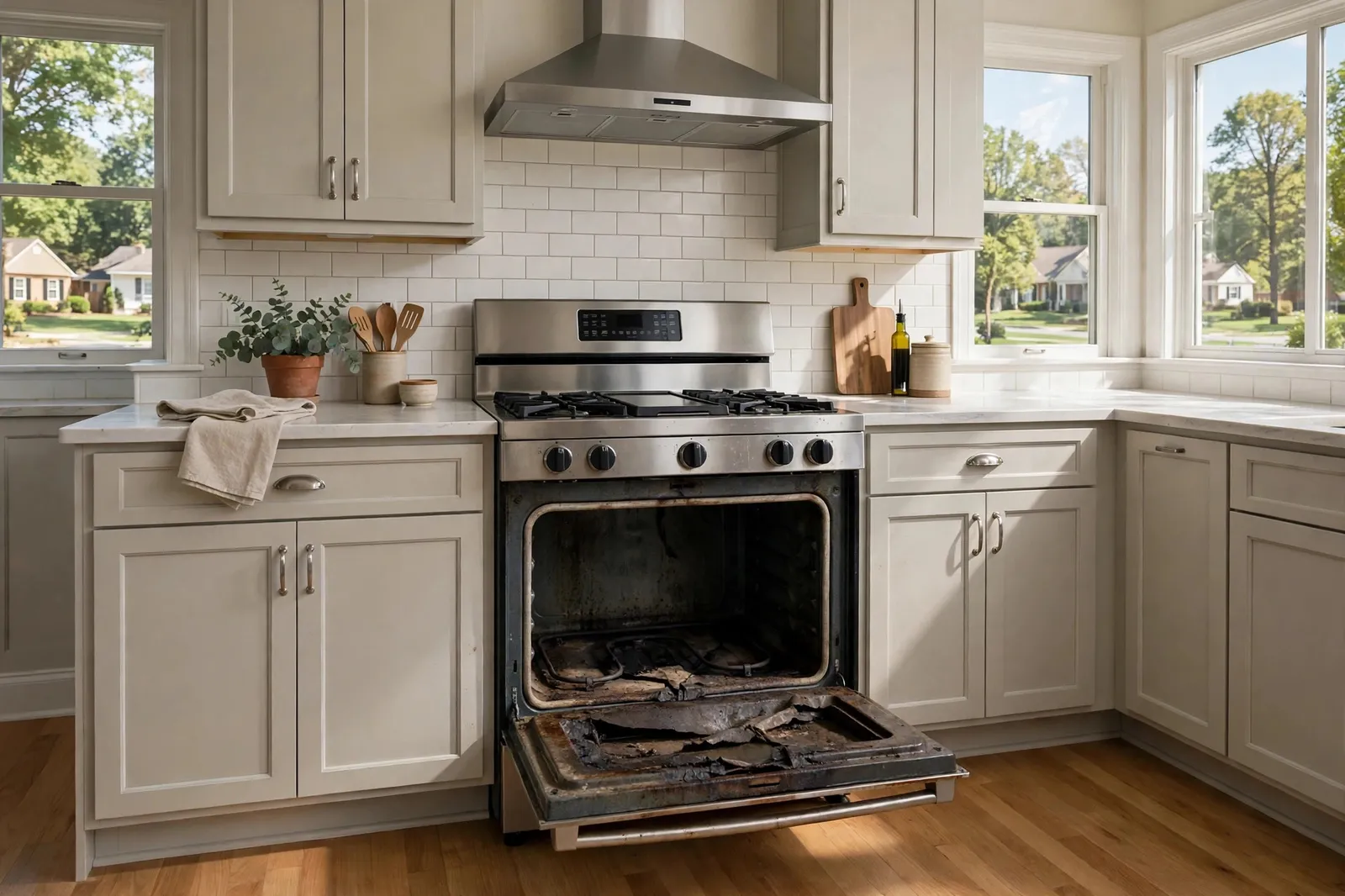
An electric range in a Dorchester home baked unevenly, swung between temperatures far above and below the set point, and twice shut itself off mid-bake with an error code. Element and sensor testing both passed, and probe readings showed the control responding late and overshooting in both directions, which traced the fault to the electronic control board. We replaced the board, then verified temperature against a thermometer through a full heat cycle at baking temperature, with readings holding steady across three checks.
No Waldorf shop publishes a local price list for range work, so we publish the national figures and label them as national. Angi's 2026 cost data puts oven, cooktop, and range repair at $100 to $500, the widest band in the kitchen because it covers both a single surface element and a full electronic control. Housecall Pro reports most appliance jobs between $107 and $249 at an average near $178, Angi puts the average repair across appliances at about $170, and labor nationally runs $50 to $150 per hour for context.
Inside that band, bake and broil elements, igniters, sensors, and switches sit at the lower and middle levels. Electronic control boards and glass top assemblies sit at the top. The testing matters to the price: a weak igniter and a failed board can present almost identically in a gas oven, and they do not cost the same to fix.
We measure. Elements get continuity tests, igniters get current draw readings, and the cavity gets a thermometer through a real heat cycle, because the panel display is the machine grading its own homework. We confirm the failed component electrically, replace it with the part matched to your range's model, and verify the repair the same way we diagnosed it, with live temperatures rather than assumptions.
The repair-versus-replace conversation is part of cooking work too. A control board on a range with a cracked glass top and worn burners may not be money well spent, while an igniter on a solid ten-year-old gas range almost always is. We will lay out what we found and give you our honest read, and then the call is yours.
Send the quote form at the bottom of this page and tell us what the oven or range is doing: slow preheat, uneven baking, an error code, a burner out, or a door that will not seal. Note whether the range is gas, electric, or dual fuel, and the brand and model from the tag around the oven door or storage drawer if you can find it. Symptoms this specific narrow the test list fast.
Angi's 2026 national data puts oven, cooktop, and range repair at $100 to $500. Elements, igniters, sensors, and switches sit at the lower and middle parts of that band, while electronic control boards and glass top work sit near the top. Most appliance jobs overall land between $107 and $249 by Housecall Pro's figures. Electrical testing is what determines where your range's problem falls.
The usual cause is a weakening igniter. The igniter must draw enough current to open the gas valve, and as it ages it glows without drawing enough, so the valve opens late or not at all. Judging by the glow alone misleads a lot of owners, because a tired igniter still lights up brightly. We measure the draw and replace igniters that fall short, which restores normal preheat times.
The display reports what the control believes, and the control believes the temperature sensor. A drifting sensor or a misreading board will hold the cavity steadily at the wrong temperature while the panel insists everything is normal. We test with an independent thermometer through a full heat cycle, which shows both the average temperature and how widely it swings, and then we know which part is lying.
Yes. Bake elements often fail gradually, blistering and splitting along the underside until only part of the element heats. The oven still reaches temperature on average, but heat distribution goes uneven, and the bottoms of baked goods undercook while the tops finish. A continuity and visual test confirms it, and replacing the element restores even heating through the cavity.
It depends on the rest of the machine. A board on a range with sound elements, a good door seal, and a solid cooktop is usually a fair repair. The same board on a range that also needs a glass top or multiple burners starts to stack costs past the machine's value. We test everything the board controls before recommending it, and we will show you the full picture either way.
It is, and it gets worse quietly. A failed gasket or tired door hinges leak heat for the entire bake, stretching cook times, cooking unevenly, and heating the cabinet faces beside the range. We check the seal around the full perimeter and the hinge tension. Gaskets are modest parts, and catching the leak early protects the control board from the extra heat cycling too.
Tell us which appliance is down and what it is doing. We read every request that comes in and respond with the published national range for that kind of repair and the next step, starting with a visit to test and confirm the failed part on site.
Prefer to talk it through first? Send the form and we will call you back at the number you give us.